In Rooms
How to Make a Small Living Room Look Bigger on a Budget
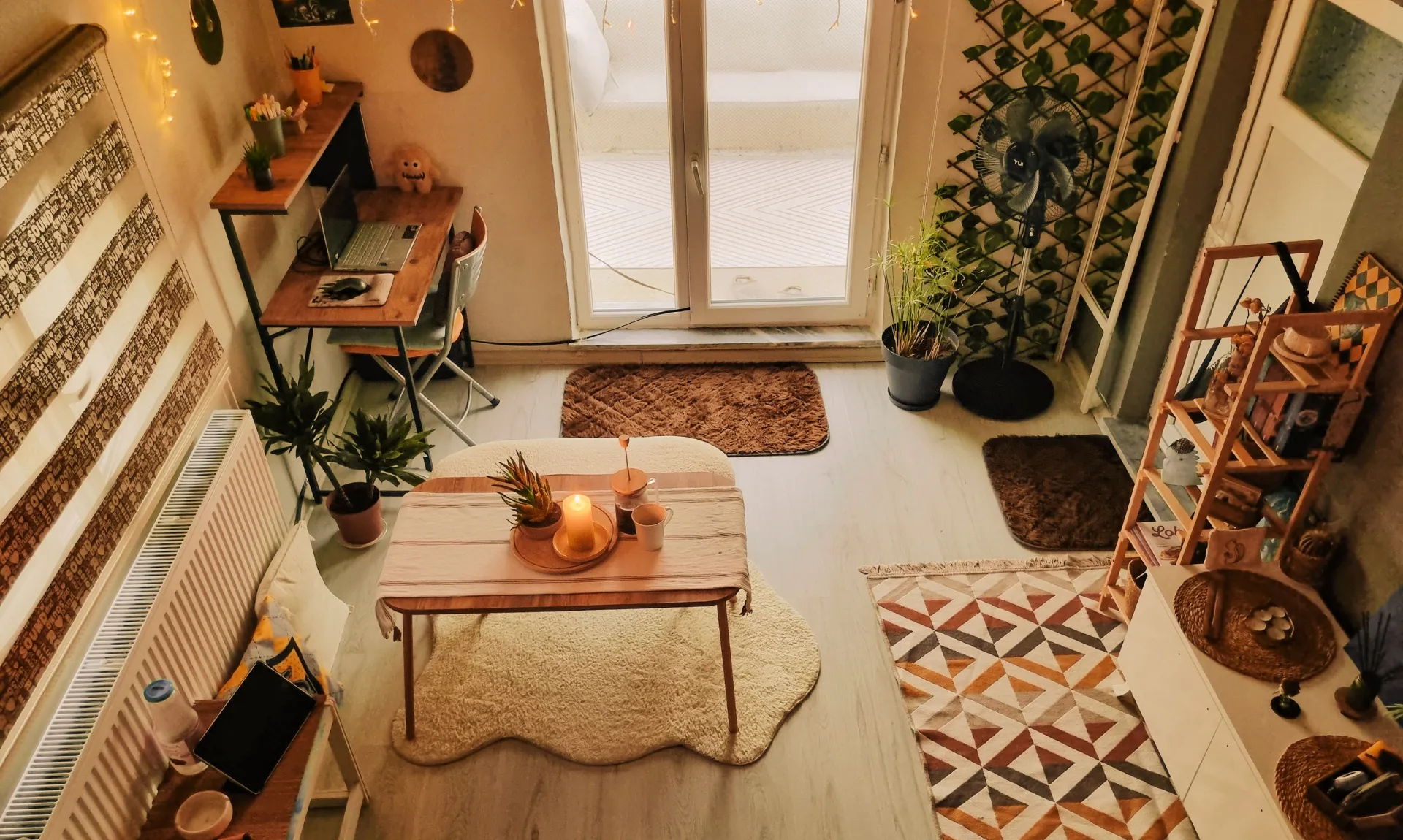
This post may contain affiliate links. As an Amazon Associate, I earn from qualifying purchases at no extra cost to you.
There is a particular kind of frustration that comes with a small living room. You tidy it. You fluff the cushions. You move the coffee table approximately seventeen times. You even remove that decorative basket you were convinced was going to make the room look Pinterest-worthy. And somehow, five minutes later, the room still feels like it has shrunk.
The good news? You probably don't need a bigger sofa, a bigger house, or a suspiciously expensive interior designer. A small living room can feel surprisingly spacious when you change how the eye moves through the room rather than simply trying to squeeze more things into it.
Designers use all sorts of clever tricks to create the feeling of depth, height, and breathing room. The best part is that many of them don't require a renovation, or even new furniture. So before you start browsing listings for apartments with suspiciously large living rooms, try these budget-friendly tricks first.
Start by Creating Some Breathing Room
Let's begin with the most underrated decorating trick of all: space itself.
When a small living room is packed with furniture and decor, every object starts competing for attention. Your sofa touches the wall, the coffee table practically touches the sofa, the side table is touching the coffee table, and suddenly everything looks like it's attending a very crowded family reunion.
The solution isn't necessarily getting rid of everything. Instead, look for places where you can create small pockets of empty space.
If your layout allows it, pull your sofa slightly away from the wall rather than automatically pushing every piece of furniture against it. Even a small gap can create visual separation between the furniture and the wall, making the room feel less like one solid block.
You don't need six inches everywhere or a perfect designer-approved floor plan. Just experiment. Move the sofa. Step back. Move it again. Yes, decorating sometimes involves more pushing furniture around than anyone warned us about.
Look Up: Your Walls Are Doing Nothing
One of the easiest ways to make a small living room feel taller is to stop decorating everything at floor level.
Sofas, coffee tables, baskets, cabinets, and rugs naturally create a horizontal band across the lower half of the room. If everything interesting happens down there, your eyes have very little reason to travel upward. That's when a room can start feeling oddly flat and compressed.
Bring some visual interest higher up. Try:
Tall plants
Floor lamps
Vertical artwork
A narrow bookshelf
Taller curtains
Wall-mounted decor
A large piece of artwork rather than several tiny pieces
The idea isn't to fill every inch of wall. It's to create a little vertical rhythm so the eye naturally moves from the floor toward the ceiling. Varying the heights of furniture and decor can make the room feel more dynamic and give the space a stronger sense of dimension. Think of it as giving your eyes somewhere to go besides directly into the back of the sofa.
Budget Space Picks
- Pipishell Solid Wooden Coat Rack FreestandingKeep your entryway neat with this solid wood coat rack featuring 8 sturdy hooks, adjustable height, and a space-saving design.View on Amazon
- 2x6 Hallway Washable Runner RugAdd comfort and style to your home with this washable runner rug, featuring a soft feel, non-slip backing, and timeless design.View on Amazon
- Gold Vintage Decor Vanity MirrorAdd timeless elegance to your space with this vintage Baroque mirror, featuring an ornate gold frame and crystal-clear reflection.View on Amazon
Hang Your Curtains Higher
This one costs very little but can make a surprisingly noticeable difference. If your curtain rod sits directly above the window frame, the window's height is clearly defined. Your eye sees where the window begins and ends.
Instead, try mounting the curtain rod higher, closer to the ceiling, and use curtains that reach toward the floor. This draws the eye upward and emphasizes the full height of the wall, helping the room feel taller.
And please don't buy curtains that stop awkwardly halfway down the wall unless that's genuinely the look you're going for. In a small room, long curtains can help create one continuous vertical line instead of chopping the wall into separate sections. It's a tiny decorating decision with a rather satisfying visual payoff.
Give Your Lighting More Than One Job
If your living room has one ceiling light doing absolutely everything, we need to have a little conversation. The overhead light is useful. It is excellent for finding things you dropped under the sofa and discovering just how much dust has accumulated in places you prefer not to investigate.
But it shouldn't have to do all the decorating. A room tends to feel more dimensional when you use several sources of light at different heights. Instead of one bright pool of light in the middle, think about combining:
A floor lamp beside the sofa
A table lamp on a side table
A small accent light near artwork or shelving
Your existing ceiling light for general illumination
Layered lighting creates areas of light and shadow instead of bathing every surface in exactly the same brightness. That variation can help furniture, textures, and corners feel more defined.
And you don't need to buy five new lamps. Start with one affordable floor or table lamp and see what it does for the room. Sometimes the cheapest makeover is simply turning off the giant overhead light.
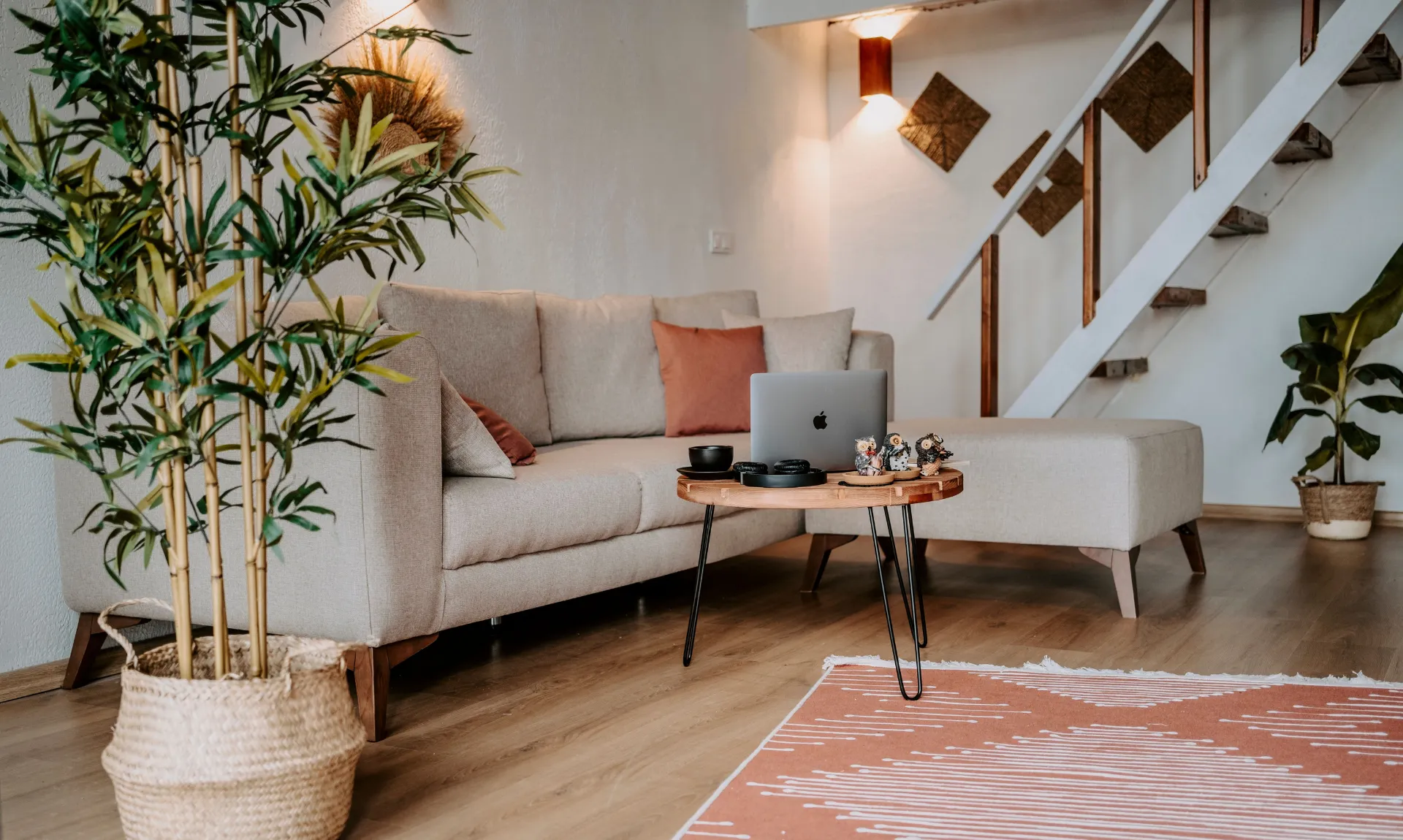
Use a Mirror Where It Can Actually Help
Mirrors are a classic small-space trick for a reason. But rather than randomly hanging a tiny decorative mirror somewhere because you heard mirrors make rooms look bigger, think about what the mirror is reflecting.
A mirror facing a window can bounce natural light around the room. A mirror reflecting an attractive part of the space can also make that area feel visually deeper. Meanwhile, a mirror reflecting a pile of laundry? Congratulations. You have doubled the laundry. Placement matters.
A larger mirror can often make a stronger visual impact than several small decorative mirrors scattered around the wall. And if you're shopping on a budget, check thrift stores and secondhand marketplaces before buying a brand-new one. The mirror doesn't need to be fancy. It just needs to be in the right place.
Don't Automatically Buy a Tiny Rug
Small rooms often lead people to buy small rugs because, logically, smaller room = smaller rug.
Unfortunately, decorating does not always respect our logic. A rug that's too small can make the furniture arrangement feel disconnected, with every piece floating separately instead of belonging to one defined seating area.
If you already have a rug, see whether you can position it so at least the front legs of your main seating pieces sit on it. If you're buying one, measure your seating area first instead of choosing a size based purely on what fits in the shopping cart.
And if a large rug isn't in the budget, don't panic. You can work with the rug you already have. Sometimes simply repositioning it makes the room feel more intentional without costing a single dollar. Which is exactly the kind of decorating advice we like around here.
Create a Little Visual Height
Here's another trick that costs almost nothing: style your surfaces at different heights.
Imagine a coffee table with one candle sitting in the middle. It's not terrible. It's just... lonely. Now imagine a small stack of books, a low bowl, and a taller vase or plant grouped nearby. Suddenly there's a little movement.
The same principle works on shelves, consoles, side tables, and even a media cabinet. You can create a simple arrangement using:
Something tall + something medium + something low.
For example:
A vase with branches
A small ceramic object
A couple of stacked books
Or:
A table lamp
A framed photo
A small bowl
The point isn't to buy three new decorative objects every time you style a surface. Shop your own home first. That basket in the bedroom might look much better beside the sofa. Those books on the nightstand might work beautifully on the coffee table. That vase you've been ignoring for two years may suddenly become the star of the show.
Your home already contains more decor than you think. It may simply be living in the wrong room.
Stop Trying to Make Everything Match
Matching furniture sets can be convenient, but a room where absolutely everything coordinates can sometimes feel strangely flat.
Your sofa matches the chairs. The chairs match the coffee table. The coffee table matches the side table. The side table matches the TV console. And now your living room looks like it was delivered in one very efficient box.
Instead, introduce a little variation. Mix wood with metal. Add a woven texture beside something smooth. Pair a modern lamp with a thrifted side table. Add an old book stack to a newer coffee table. The goal isn't chaos. It's contrast.
A room becomes more interesting when everything doesn't have exactly the same texture, shape, height, or visual weight. The source material makes a similar point about introducing personality and intentional imperfection rather than creating a perfectly coordinated showroom.
And thankfully, contrast is often cheaper than coordination. You don't need to buy an entire new matching set. There’s also a dedicated guide about why matching sets can be such a big turn-off and what to do instead; this can be quite helpful if you’re looking for answers!
Budget Space Picks
- Floating Shelves, Set of 2 Wall ShelvesA set of two stylish two-tier floating shelves with a chic industrial design. Perfect for displaying decor, books, or everyday essentials while saving space.View on Amazon
- MAXYOYO Modern Accent Chair For Comfy Living With Metal FrameA soft, minimalist accent chair with tufted corded fabric, supportive cushioning, and sturdy wooden armrests. Perfect for adding a comfortable, stylish seat to your living room, bedroom, or office.View on Amazon
- Round Coffee Table With StorageA rustic round coffee table with a spacious tabletop and lower storage for books or decor. Its wood-grain finish, sturdy metal legs, and adjustable feet make it a practical and stylish choice for any living room.View on Amazon
Give Your Coffee Table Some Personality—But Not Too Much
Small living rooms have a difficult relationship with coffee tables. They are useful. They are also excellent at becoming accidental storage units. Remote controls. Receipts. Cups. Chargers. A random hair tie. Something nobody can identify.
Before styling your coffee table, clear everything off. Then bring back only a few things. A simple arrangement could be:
A stack of books
A small tray or bowl
A vase, candle, or small plant
Leave some of the surface visible. That empty space matters because your goal isn't to prove that you own decorative objects. It's to make the room feel calm and intentional. If the coffee table looks like a tiny flea market, you've gone too far.
Use Vertical Storage Instead of Spreading Out
When floor space is limited, start thinking upward. A tall, narrow bookshelf can provide storage without taking up the same floor area as a wide cabinet. Wall-mounted shelves can also give you somewhere to display books, plants, frames, and small decor without sacrificing precious floor space.
But there's an important catch. Don't fill every shelf from corner to corner. A little empty space makes the objects you do display more noticeable and keeps the room from feeling visually crowded.
This is especially useful in small living rooms because you're solving two problems at once: storage and visual height. And if you're renting, removable shelves or freestanding pieces can give you some of the same benefits without committing to a renovation.
Let One Thing Be the Star
A small room doesn't need ten statement pieces. In fact, it usually works better with one. Maybe it's:
A large piece of artwork
A beautiful vintage mirror
A dramatic floor lamp
A colorful armchair
A statement rug
A collection of framed photographs
Choose something that gives the room a focal point, then let the rest of the decor support it. When every object is competing to be noticed, the room becomes visually noisy. When one or two pieces carry the personality, everything else can breathe.
This is also excellent for a budget because one memorable piece can do more work than ten inexpensive decorations. And that piece doesn't have to be expensive. Thrift stores, flea markets, secondhand shops, and even your own storage cupboard can produce some surprisingly good candidates.
If you’re a thrift buddie, you’re gonna love my guide on thrift store finds that add value and character to your space!
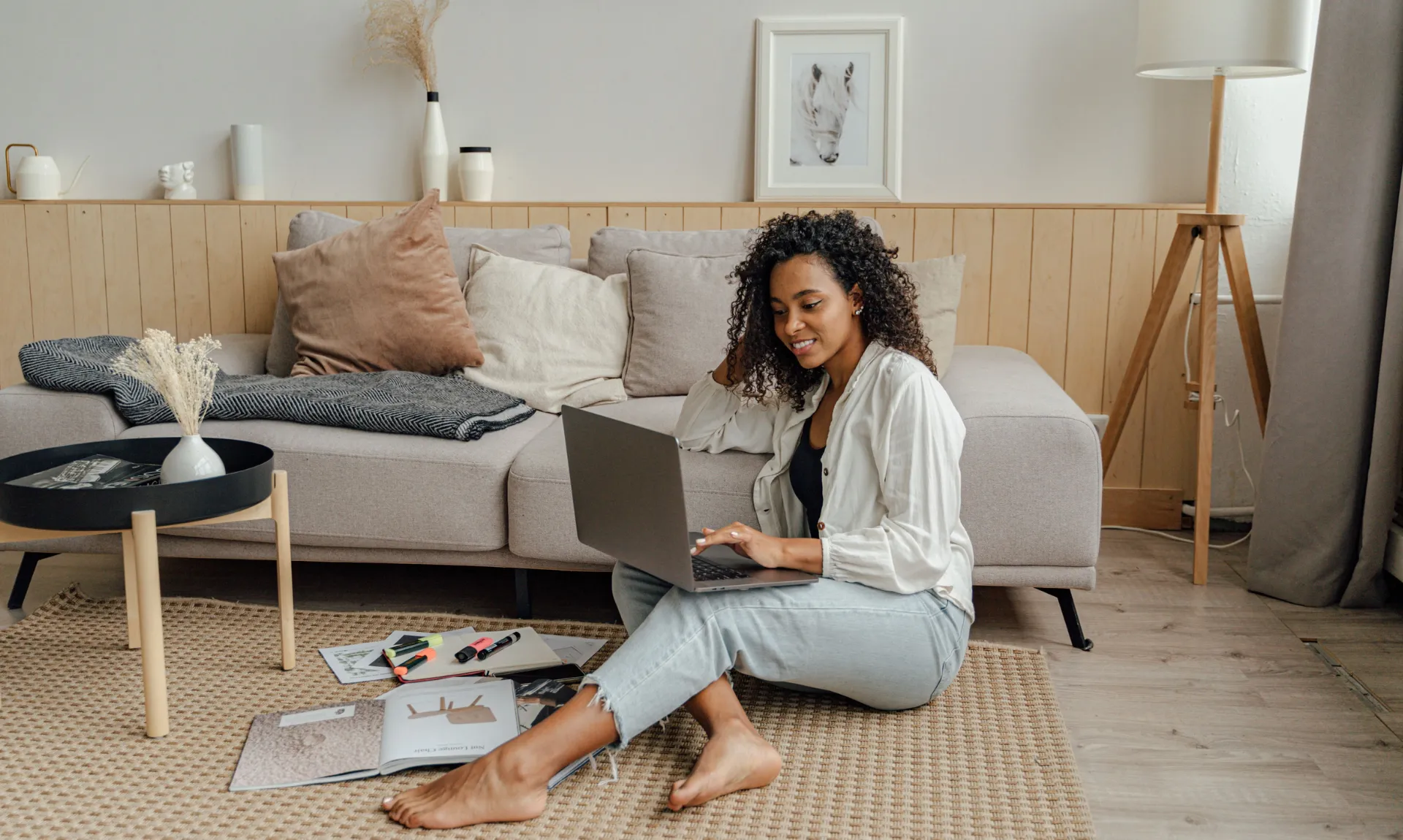
Keep Some Empty Space
This may be the hardest decorating advice to follow because empty space can feel like something is missing. But sometimes, nothing is missing.
The empty corner beside the sofa doesn't necessarily need a basket. The wall doesn't necessarily need another frame. The coffee table doesn't need another candle. And that shelf absolutely does not need one more tiny ceramic object just because there is technically room for it.
Empty space gives the eye a place to rest. It also makes the things you do have feel more deliberate. So before buying something to fill an empty spot, ask yourself: Does this space actually need something, or am I just uncomfortable with emptiness? That question can save you money surprisingly quickly.
Make the Room Feel Bigger Without Making It Feel Empty
There is a difference between spacious and bare. The goal isn't to strip your living room down until it looks like you're waiting for the furniture delivery. You still want texture, warmth, personality, and things that make the room feel like someone actually lives there.
The trick is to create visual breathing room while keeping the things you genuinely enjoy. You can consider fewer competing objects with better placement, using space vertically and have less clutter, adding more layers and less matching sets, and you can end up having a pretty nice looking living room even if it’s in a small space.
These little changes can completely shift the way a room feels without requiring a complete makeover.
Your Small Living Room Doesn't Need a Bigger Budget
The easiest decorating trap is assuming that every problem requires a purchase. The room feels small? Buy a new sofa. It feels boring? Buy new decor. The walls feel empty? Buy art. The lighting feels harsh? Replace every light fixture in the house.
Before you know it, your “budget makeover” has become an invoice you would rather not discuss. Instead, start with what you already have.
Move the furniture. Raise the curtains. Rearrange your shelves. Change the lighting. Create different heights. Remove a few unnecessary objects. Bring a mirror into the right spot. Then, if something is genuinely missing, buy that one thing intentionally.
A well-designed small living room isn't about tricking yourself into believing you have a mansion. It's about making the space you actually have feel lighter, more open, and more thoughtfully put together. And honestly, that's a much better goal.
Continue Reading
If you enjoyed these ideas and want more ways to make your home feel beautiful without making your wallet cry, visit My Budget Space. We believe a stylish home doesn’t have to come with a scary price tag; it just needs a little creativity (and maybe a good eye for a bargain).
Frequently Asked Questions
How can I make a small living room look bigger on a budget?
You can make a small living room look bigger without a major makeover by rearranging furniture, using mirrors to reflect light, hanging curtains higher, improving layered lighting, reducing visual clutter, and making better use of vertical space. Many of these changes can be made using things you already own.
What colors make a small living room look bigger?
Light and soft colors can help a small living room feel more open by reflecting more light and creating a sense of visual continuity. You don't have to make everything white, though. Soft neutrals, warm beige, light gray, pale green, and other muted shades can work beautifully while still giving the room personality.
Does a mirror make a small living room look bigger?
Yes, a well-placed mirror can make a small living room feel larger by reflecting natural light and creating the illusion of additional depth. For the biggest impact, try placing a larger mirror where it can reflect a window, light source, or attractive part of the room.
What furniture is best for a small living room?
Furniture with a smaller visual footprint, simple shapes, and useful storage can work particularly well in a small living room. Consider narrow shelving, furniture with exposed legs, multifunctional pieces, and a coffee table that leaves enough walking space around it. The goal is not to fill every available corner but to maintain enough breathing room for the space to feel open.